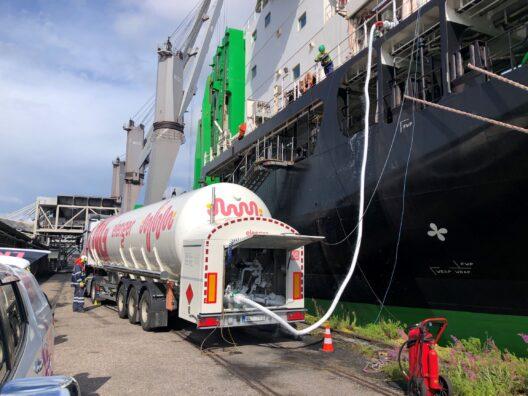
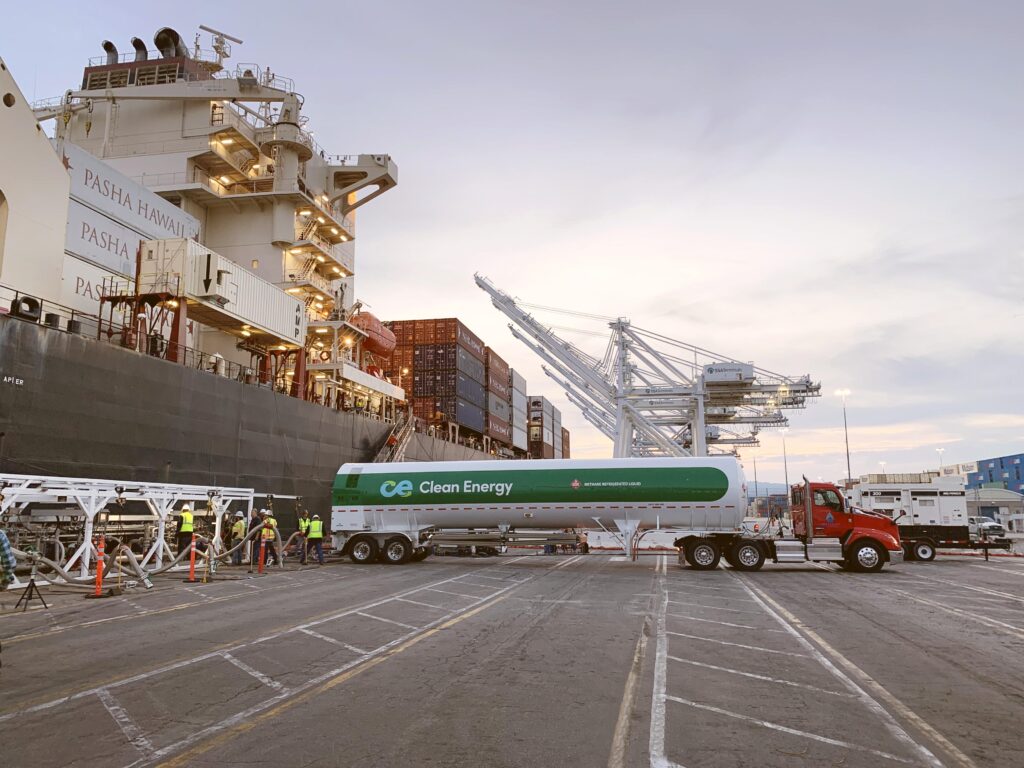
LNG is the most established alternative marine fuel in service today. It removes virtually all sulphur oxide emissions, sharply cuts particulate matter, and gives ship owners a compliant fuel that is available at around 200 ports worldwide through ship-to-ship, truck-to-ship and shore-to-ship delivery.
Unnic specialises in truck-to-ship LNG bunkering, the most flexible way to fuel a vessel at ports that don’t yet have dedicated LNG bunker vessels or fixed pipelines. A cryogenic road tanker, typically carrying tens of cubic metres of LNG, connects to the vessel at the quayside through a purpose-built transfer skid. Several deliveries can be sequenced to meet larger requirements.
In 2025, the Directorate General of Shipping issued DGS Circular No. 17 of 2025, setting safety and operational guidelines for LNG bunkering in Indian waters. It covers ship-to-ship, truck-to-ship and shore-to-ship (pipeline) bunkering and applies to ship owners, bunker suppliers, receivers, terminal operators, trucking companies and port stakeholders. Unnic’s procedures are designed around these requirements, alongside the IGF Code and industry practice such as ISO 20519 and SGMF guidance.
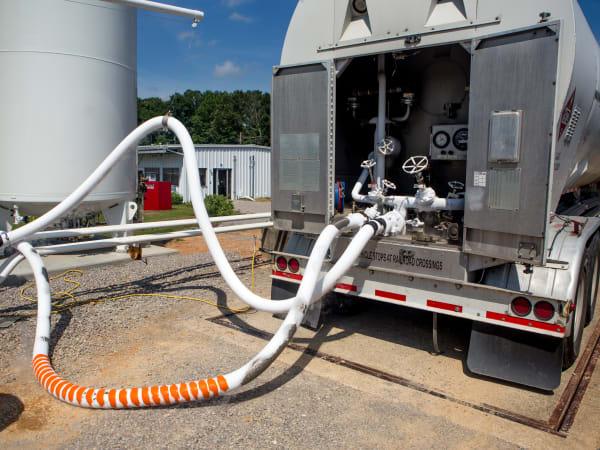
Most LNG bunkering incidents are decided before the hose is connected. We do the work that happens beforehand, and we attend the work that happens after.
We carry out ship-shore compatibility studies against your vessel’s manifold, ESD interface and vapour handling arrangement; we write bunkering procedures and checklists specific to the vessel and terminal; and we conduct risk assessment and HAZID input for the transfer.
On the day, our engineers attend as supervising representatives — witnessing connection, monitoring the transfer, and verifying the measurement and documentation.
Includes
From vessel compatibility and cryogenic equipment to LNG transfer and on-site supervision, Unnic Bunkering Services provides the technical support needed for a controlled, efficient and well-documented operation.